
On this page
- What is FemiCore?
- Why bladder control changes for so many women
- How FemiCore is designed to work
- What’s inside: the two blends
- What the research does, and doesn’t, show
- Pros and cons
- Who might consider FemiCore, and who should not
- Safety, side effects and drug interactions
- How to take it and when to expect results
- FemiCore price and packages
- The 60-day money-back guarantee
- Where to buy FemiCore
- Final verdict
| Product type | Dietary supplement capsule for women’s bladder and urinary support |
| Serving | 1 capsule daily with 6–8 oz (180–240 ml) of water, adults only |
| Capsules per bottle | 30 (a 30-day supply) |
| Herbal blend | 350 mg: Mimosa pudica, bearberry, cranberry extract, granular berberine |
| Probiotic blend | 50 mg: L. crispatus, L. acidophilus, L. plantarum, L. gasseri, L. casei |
| Individual amounts / CFU | Not disclosed (proprietary blends) |
| Price | $49–$79 per bottle depending on package |
| Guarantee | 60 days from delivery, all bottles returned |
| Retailer | BuyGoods (seller’s checkout only) |
Our verdict in brief
FemiCore is a reasonably designed, stimulant-free supplement built around a growing area of science: the bacteria that live in the bladder. Its best-supported ingredient is cranberry. Its weaknesses are no trials on the finished formula, undisclosed amounts of each ingredient, and a small probiotic dose by weight. If you accept those limits and want a gentle daily option alongside proven habits like pelvic floor training, the 60-day refund window makes it a sensible thing to try. It is not a treatment for incontinence or infections.
What is FemiCore?
FemiCore is a dietary supplement sold online by its vendor through the retailer BuyGoods. It is aimed at adult women who notice sudden urges, small leaks when they cough or laugh, or more trips to the bathroom than they would like. Each bottle holds 30 capsules, and the label directs you to take one capsule a day with 6 to 8 ounces of water.
The formula has two parts. The first is a 350 mg herbal blend made of Mimosa pudica seed, bearberry (uva ursi) leaf, cranberry extract and granular berberine. The second is a 50 mg probiotic blend containing five Lactobacillus species: L. crispatus, L. acidophilus, L. plantarum, L. gasseri and L. casei. The seller describes the product as natural, non-GMO, stimulant-free and made in a facility that follows FDA rules and Good Manufacturing Practices.
What makes FemiCore different from a standard cranberry pill is its focus. Rather than targeting only infections, it is marketed around the idea that an imbalanced urinary microbiome may contribute to bladder irritation, urgency and leaks. For a deeper walk-through, read what FemiCore is and what it is not.
Why bladder control changes for so many women
Bladder leaks are common and nothing to be ashamed of. According to the US Office on Women’s Health, urinary incontinence affects about twice as many women as men, and more than four in ten women aged 65 and older live with it. Pregnancy, childbirth and menopause all raise the risk, and so do excess weight, chronic constipation, some medicines and high caffeine intake.
Clinicians usually describe three patterns:
- Stress incontinence: leaks when pressure on the bladder rises, for example when you cough, sneeze, laugh, lift or exercise. It is the most common type in younger women and is usually linked to weaker pelvic floor muscles.
- Urge incontinence (overactive bladder): a sudden, strong need to go, sometimes with leaking before you reach the toilet. It is more common later in life.
- Mixed incontinence: a combination of both, which many women have.

This matters when you judge any supplement. Stress leaks are mainly a muscle-support problem, so the first-line approach is pelvic floor training, not pills. Urge symptoms involve bladder signaling and irritation, which is where the microbiome theory behind FemiCore is aimed. Our guides on leaking when coughing or laughing and overactive bladder after menopause explain these differences in more depth.
How FemiCore is designed to work
For decades, urine in a healthy bladder was assumed to be sterile. Newer lab techniques have shown that the bladder has its own low-level community of microbes, often called the urinary microbiome or urobiome. Researchers have reported differences in this community between women with and without urinary incontinence, and the seller’s own reference list leans heavily on these studies.

FemiCore’s logic runs like this:
- Probiotics from the Lactobacillus family, which dominate a healthy female urogenital tract, are meant to support a more balanced microbial community.
- Cranberry supplies proanthocyanidins (PACs), which are thought to make it harder for some bacteria to stick to the bladder wall.
- Bearberry has a long traditional use for urinary complaints.
- Berberine is a plant compound studied for its effects on microbes and metabolism.
- Mimosa pudica seed is a traditional herb with mostly laboratory-level research.
It is an appealing theory, but most microbiome research shows associations, not proof that a capsule will reduce leaks. See how FemiCore works for the full mechanism.

Want to see FemiCore’s current offer?
Packages start at $49 per bottle when you choose six, with free US shipping and a 60-day money-back guarantee from the seller. Check the latest price and stock on the seller’s secure checkout.
Check availability & price →Paid link: we may earn a commission at no extra cost to you. Sold by the seller via BuyGoods, not by this site.
What’s inside: the two blends

| Ingredient | Blend | What it is mainly studied for | Evidence strength |
|---|---|---|---|
| Cranberry extract | Herbal, 350 mg total | Lowering recurrent UTI risk | Moderate (Cochrane 2023) |
| Bearberry (uva ursi) | Herbal | Short-term urinary symptom relief | Traditional use |
| Granular berberine | Herbal | Microbial and metabolic effects | Mostly lab, animal, metabolic studies |
| Mimosa pudica | Herbal | Antimicrobial and antioxidant activity | Lab studies only |
| L. crispatus | Probiotic, 50 mg total | Female urogenital microbiome | Early clinical research |
| L. acidophilus | Probiotic | Gut and vaginal health | Mixed |
| L. plantarum | Probiotic | Gut health, small urinary pilot studies | Early |
| L. gasseri | Probiotic | Vaginal microbiome | Early |
| L. casei | Probiotic | Gut health | Limited for bladder |
Because both blends are proprietary, the label does not tell you how much of each ingredient you get. The whole herbal blend weighs 350 mg, shared across four botanicals, so each one is present in modest amounts. The probiotic blend lists a weight (50 mg) but not a CFU count, which is the number that actually describes how many live bacteria you are taking. Our full ingredient breakdown covers every component.
What the research does, and doesn’t, show
Here is a fair summary of the evidence behind the main ideas:
- Cranberry: A 2023 Cochrane review concluded that cranberry products probably reduce the risk of symptomatic UTIs in women with recurrent infections. The NIH’s complementary health center notes it is not a treatment for an active infection.
- Probiotics for UTIs: A 2015 Cochrane review found no clear reduction in UTIs with probiotics, though the studies were small. The NIH also notes that benefits depend on the specific strain and dose.
- Bearberry: The European Medicines Agency accepts traditional use for mild, recurrent lower urinary tract symptoms in adult women, but only for up to one week at a time and not in people with kidney disorders.
- Microbiome and incontinence: Observational studies link microbiome patterns with incontinence severity, but they do not show that a supplement can reverse it.
- The finished product: We found no published clinical trial of FemiCore itself.
In short, FemiCore rests on plausible science rather than proven results. We go ingredient by ingredient on our FemiCore research page.
Pros and cons
Who might consider FemiCore, and who should not
FemiCore may suit an adult woman with mild urgency or occasional leaks who has already seen a clinician to rule out infection or other causes, is doing pelvic floor exercises, and wants an additional gentle routine. It may also appeal to women who already like taking cranberry or probiotics and want both in one capsule.
It is not a good fit if you are pregnant or breastfeeding, under 18, have kidney or liver disease, are seriously ill or immunocompromised, or take diabetes medicines, blood thinners, immunosuppressants or many prescription drugs without first checking with a pharmacist. It is also not the right choice if you have symptoms of a urinary infection, such as burning, fever, back pain or blood in the urine. Those need medical care.
Safety, side effects and drug interactions
Talk to your doctor or pharmacist first if you take any regular medicine. Berberine-containing herbs can change how the body processes many drugs; NIH notes that goldenseal, a berberine source, lowered metformin levels in a study of healthy adults. Cranberry may interact with warfarin, and evidence on that is mixed. Berberine is not considered safe during pregnancy or breastfeeding.
For most healthy adults, the likely side effects are mild: some bloating or stomach changes in the first days as the probiotics settle, and occasional nausea. Bearberry contains arbutin, which is why regulators limit its use to short periods. Because FemiCore does not publish how much bearberry each capsule contains, we cannot tell you whether the amount is meaningful, so long-term users should mention it to their clinician. See FemiCore side effects and drug interactions for the full picture.
How to take it and when to expect results
Take one capsule a day with a glass of water (6 to 8 oz). The seller suggests mornings, and consistency matters more than the exact time. Do not exceed the label dose.
The seller recommends at least three months of use, and up to six months for women over 50 or with long-standing symptoms. That long horizon reflects how slowly microbial communities change, but it also means you should judge the product fairly: keep a simple bladder diary before you start and again at weeks 4, 8 and 12. Our results timeline explains what is realistic and when to reassess.

Questions to ask your doctor before trying FemiCore
A short appointment can save you time and money. Consider asking:
- What type of incontinence do I have: stress, urge or mixed?
- Could an infection, a medicine or another condition be causing my symptoms?
- Is berberine, cranberry or bearberry safe with my current medicines and my kidney function?
- Would a referral to a pelvic floor physical therapist help me?
- What should make me stop a supplement and come back?
Bring the FemiCore label details and a three-day bladder diary to that visit. The diary shows your clinician how often you go, when urges strike and what triggers leaks, which often points straight to the most useful next step. Clear answers will tell you whether a supplement is a reasonable add-on or whether another approach should come first.
FemiCore price and packages
FemiCore is sold in three packages on the seller’s checkout. The more bottles you buy, the lower the price per bottle, with the six-bottle package working out to about $1.63 a day.
2 Bottles
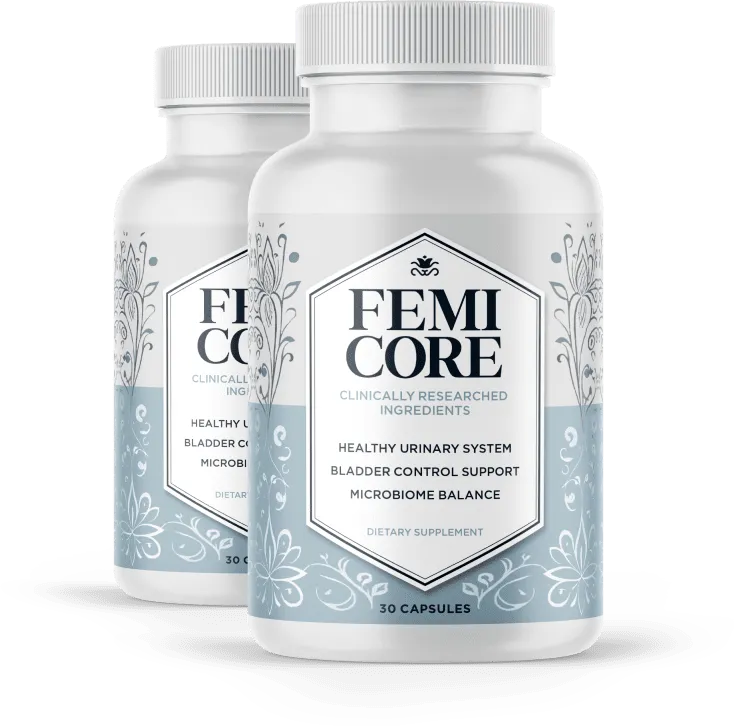
- 2 bottles · 60 capsules
- 60-day money-back guarantee
- One-time payment, no subscription
6 Bottles
- 6 bottles · 180 capsules
- 3 free digital bonus guides
- Free US shipping
- 60-day money-back guarantee
3 Bottles
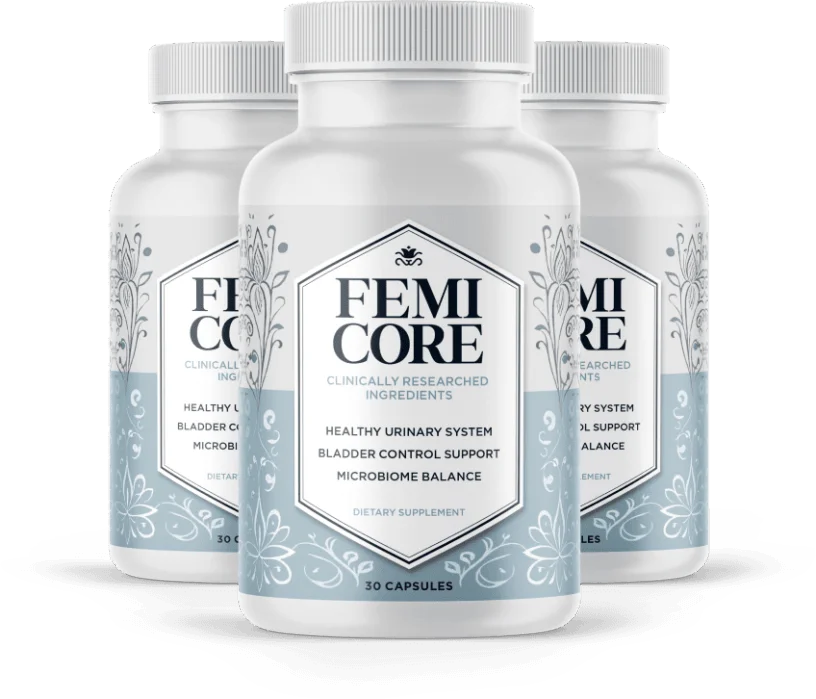
- 3 bottles · 90 capsules
- Free US shipping*
- 60-day money-back guarantee
Prices as listed on the seller’s order page in October 2026. Totals are bottle price × bottles. *Shipping on the 3-bottle package is shown at checkout; the order page has displayed both free and $9.99 shipping. Always confirm the final amount before you pay. International orders: $15.95 shipping.
The six-bottle package adds three digital bonus guides (relationships, gut health and hip mobility). Choose a package based on how long you want to test the product, not the extras. See the full FemiCore price breakdown.
The 60-day money-back guarantee
60-day money-back guarantee (from the seller). The window starts on the day your package is delivered. To claim it you email the seller’s support team, return all bottles (opened or not) with the packing slip, and pay the return postage yourself. Full steps: how to get a FemiCore refund.
One detail many buyers miss: the guarantee is 60 days, but the seller recommends taking FemiCore for at least three months. If you buy six bottles, you will need to decide about a refund before you reach the end of the supply. Read our guarantee guide for a day-by-day timeline.
Where to buy FemiCore
According to the seller, FemiCore is sold only through its own website, with BuyGoods acting as the retailer and payment processor. It is not listed by the seller on Amazon, Walmart or in pharmacies, so third-party listings may not be genuine and may not be covered by the guarantee. US shipping takes about 5 to 7 working days, and the seller emails tracking details within 60 hours. Learn how to avoid copies in where to buy FemiCore, and check our honest take on whether FemiCore is legit.

Final verdict
FemiCore is not a miracle cure. It is a convenient, once-daily blend that combines one well-supported urinary ingredient (cranberry) with probiotics and herbs backed by early or traditional evidence.
If your goal is better bladder control, the strongest evidence still points to pelvic floor training, bladder retraining, a healthy weight, and limiting caffeine and alcohol, along with medical care when needed. FemiCore can sit alongside those steps for women who want to try a microbiome-focused supplement, especially with a 60-day refund window as a safety net. For our full scoring and analysis, read the in-depth FemiCore reviews page.
Ready to decide?
If FemiCore fits your situation and your doctor has no concerns, the six-bottle package offers the lowest price per bottle. Smaller packages let you try it with less money up front.
Check availability & price →Paid link: we may earn a commission at no extra cost to you. Sold by the seller via BuyGoods, not by this site.
Frequently asked questions
What is FemiCore used for?
FemiCore is a dietary supplement marketed to support women’s bladder control and urinary comfort by supporting a balanced urinary microbiome. It is not a treatment for incontinence or urinary infections.
What are the ingredients in FemiCore?
Each capsule contains a 350 mg herbal blend (Mimosa pudica, bearberry, cranberry extract, granular berberine) and a 50 mg probiotic blend (L. crispatus, L. acidophilus, L. plantarum, L. gasseri, L. casei). Individual amounts are not disclosed.
How do you take FemiCore?
The label says to take one capsule daily with 6 to 8 oz (180 to 240 ml) of water. It is for adults, and you should not exceed the recommended dose.
Does FemiCore have side effects?
Most people tolerate it well, but mild digestive changes are possible at first. Berberine can interact with medicines, and bearberry is usually advised only for short-term use, so check with a doctor if you take medication or have kidney or liver problems.
How much does FemiCore cost?
On the seller’s order page, 2 bottles cost $79 each, 3 bottles cost $69 each and 6 bottles cost $49 each, with free US shipping and three digital bonuses on the six-bottle package.
Is FemiCore sold on Amazon?
The seller says FemiCore is only available on its own website through BuyGoods. Listings elsewhere may not be genuine and may not be covered by the 60-day guarantee.
Sources
- Office on Women’s Health – Urinary incontinence
- MedlinePlus – Urinary Incontinence
- Cochrane – Cranberries for preventing urinary tract infections (2023)
- NCCIH – Cranberry: Usefulness and Safety
- Cochrane – Probiotics for preventing urinary tract infections in adults and children (2015)
- NCCIH – Probiotics: Usefulness and Safety
- European Medicines Agency – Uvae ursi folium (bearberry leaf)
- NCCIH – Goldenseal (includes berberine)
- FDA – Questions and Answers on Dietary Supplements
- FemiCore seller – Scientific references page
- FemiCore seller – Refund Policy
- FemiCore seller – Shipping Policy
- FemiCore seller – Contact & FAQ
Last reviewed and updated: October 20, 2026.
*These statements have not been evaluated by the Food and Drug Administration. This product is not intended to diagnose, treat, cure, or prevent any disease.